Learn how to Self-Publish your Picture Books in this interview with picture book author Super Jane Smith
Self-publishing picture books is a viable way to produce a quality book and it is easier now than ever before. If you have written a picture book and you would like to learn more about how to self publish it, this article is for you. I interviewed Super Author, Super Jane Smith, who has both traditionally published and self-published her picture books. Here we discuss her experiences, as well as tips and tricks of the trade.
What is self-publishing?
When a picture book creator chooses to publish their book without the support of an agent or a traditional publishing house, they are self-publishing. This often means the picture book is printed on demand rather than produced in a large print run, though some creators do choose to print copies in bulk. Self-publishing a picture book gives you full creative control over both the story and the illustrations, but it also means you are responsible for editing, design, printing, marketing, sales, and distribution. Before going to print, working with a children’s book editor can make a significant difference in the quality and polish of your final manuscript. You’ll also cover the upfront costs—a trade-off many picture book creators are happy to make in exchange for independence and ownership of their work.
Should I self-publish my picture book?
In today’s picture book market, there are many good reasons to consider self-publishing. You may have researched the traditional publishing route and decided it isn’t the right fit for you or your book. Perhaps your picture book is intended for a small or specific audience—such as family and friends, a classroom, or a niche community. You may also be planning to create just one picture book rather than pursue a long publishing career. Taking time to clarify your goals and understand who your picture book is for can help you decide whether self-publishing is the right path for you.
I spoke to an experienced picture book author, Jane Smith—known by her fans as Super Jane—to learn about her journey to self-publication.
Jane, tell me about your Picture Books

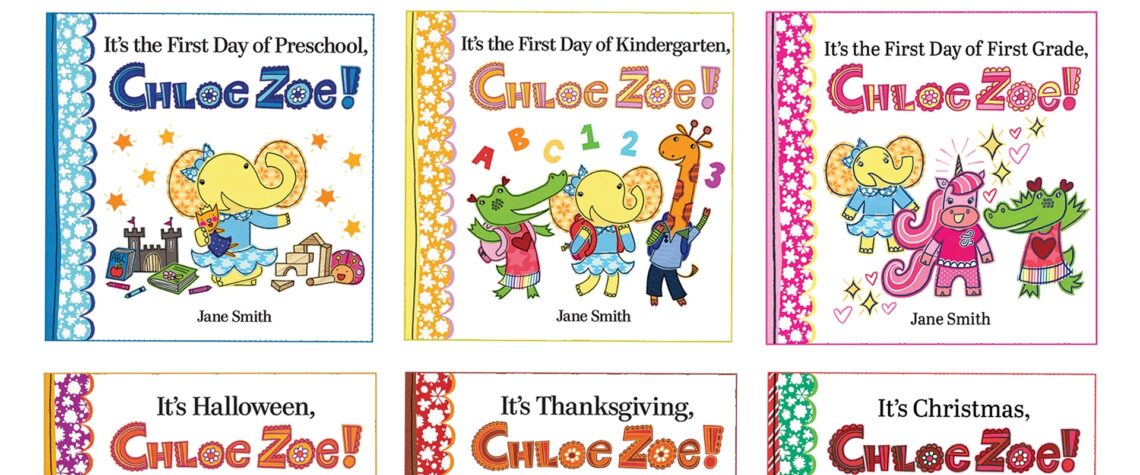
I currently have thirteen picture books (eight traditionally published and five self-published), including the 9-book Chloe Zoe series, and the stand-alone titles: Miss Meow, Hello New House, Naked Butt Busts Out and Teddy’s Bear Take a Tumble. Each of them is infused with humor and heart, and is deeply connected to kiddo’s everyday lives, concerns and joys.
What was your motivation and/or inspiration for writing these books?
Jane: Growing up with a librarian as a mom, I was constantly surrounded by books, which in turn fed a deep love of stories, no matter what form they came in—books, TV shows, movies, songs. Over time that love become obsession with how stories are constructed, orchestrated and connect us all, which became a career. Like many creatives, the job chose me, not the other way around.
As for inspiration, it’s all around me! Truly, I pull inspiration from just living my life, meeting new people and being in the world. I find the creative spark can come from anywhere, including succulents, cupcakes, gardens, comics, cartoons, trees, gadgets, my kiddo, friends, family, mysteries, film noir, punk rock, art museums, libraries, video games and more…
Why did you decide to self-publish your picture books?
Jane: The easy answer is that I wanted to bring to fruition picture book projects that I love as well as to continue my picture book series, Chloe Zoe!
The hard answer is that after 20+ years in publishing, I felt like I was constantly running a marathon with each new book project, only to come right up to the finish line without crossing it. Do that enough times and it starts to break your creative spirit. Essentially, I felt I had become a professional pitch person, rather than a professional author-illustrator. I wanted to make books. Self-publishing allowed me to reclaim my agency as a creative professional and helped heal my creative spirit.
Timeline for Self-Publishing
In traditional publishing, it can take two or more years from acquisition for a picture book to reach bookstore shelves. Self-publishing removes the need to find an agent or sell your manuscript to a publisher, but it still requires careful planning and timely execution to be successful. While the text of a picture book may be short, the process is not. You’ll need time to write and refine the manuscript, revise it multiple times, and ensure it works seamlessly with the illustrations. Illustration is a major part of the timeline—whether you are illustrating the book yourself or working with an illustrator, this stage can take several months.
In addition, you’ll need to plan for cover design, interior layout, formatting to picture book standards (such as trim size and page count), and thorough proofreading. Decisions about printing, such as print-on-demand versus offset printing, should be made early, as they can affect cost, quality, and scheduling. Marketing and distribution are also key considerations and should be planned before the book goes to print, especially if your picture book is intended for schools, libraries, or gift markets.
Every picture book creator’s timeline will look different. Creating a realistic project plan that includes milestones for writing, illustration, editing, design, pre-launch marketing, and print production is one of the best ways to stay organized and set yourself up for a smooth self-publishing experience.
How long did it take from completion of your initial draft to publication?
Jane: Generally, it takes between 2-5 years, but every book is different! Some come together faster, while others need more time. When self-publishing, I usually consider the start of a 1-year publishing plan to be a complete, polished picture book dummy with manuscript and rough thumbnail sketches.
You are the author and the illustrator for your books. For authors only, what do they need to know before contracting an illustrator for their book?
Jane: It’s important to realize that the workload of a picture book is not split 50/50 between the author and the illustrator. Illustrators do quite a bit more than half, and that big job comes with a commensurate price tag. Artwork for a standard picture book includes a front and back cover + 32 pages (16 spreads). Cost per page can range from $150-$400. This price typically provides per page: 1) a rough thumbnail sketch, 2) rough thumbnail revisions incorporated into a finished sketch, 3) a round of sketch revisions, 4) final color art, and 5) a round of color art revisions—which is to say, you are getting a lot for your money. Accordingly, the total cost for illustrating a picture book can range from $5,100-$13,600.
Note, I would recommend spelling out the terms of your arrangement in a contract before beginning the project with an illustrator. The contract should clearly state the cost, how it is to be paid out (usually 1/3 upon signing the contract, 1/3 upon approving sketches and 1/3 upon delivery of final color art) and what services are being provided, including how many rounds of revisions are covered. Typically, any additional revisions not covered by the contract are then billed separately at the illustrator’s hourly rate.
What about book design? Should authors expect their illustrators to help with book design, or should they seek a separate service?
Jane: Book design is a separate service from illustration. That said, for self-published picture books I’d highly recommend hiring an illustrator who can also provide book design services. This will simplify and streamline the process, making both collaboration and revisions considerably easier. When publishing a novel, this is less of a concern, because there is notably less art needed—mostly likely just fabulous cover art—and keeping the two services separate still works well.
Also note that a hired book designer should be working in InDesign, which is a professional page layout program. When they deliver final files to you, they should include not only the files required by the printer (most likely PDFs for print and EPUB interiors + JPG covers for e-books), but also the original InDesign layout and support files. This is not only because the book is your original project, but also, so you have the ability to easily update images and text in the future without recreating the original layout (with or without the original designer).
Basics of Printing and Distribution
There are many options available for printing and distributing a picture book, and careful research will help you choose what works best for your goals, budget, and audience. Picture books have unique production needs such as full-color printing, specific trim sizes, and higher-quality paper, so it’s especially important to understand your options before committing to a printer or distributor.
Some creators choose to use a single company that handles both printing and distribution, while others prefer to separate these tasks. Using one company can simplify the process and reduce logistical challenges, especially for first-time self-publishers. Many print-and-distribute platforms offer detailed resources on costs, file preparation, print quality, distribution channels, and even e-book options. Keep in mind, e-books are often less effective for picture books.
IngramSpark is a widely used platform for self-published picture books. It offers access to global distribution, including bookstores, libraries, and schools. IngramSpark provides helpful tools for estimating print costs, setting retail prices, and choosing trim sizes and binding options appropriate for picture books. KDP (Kindle Direct Publishing) is Amazon’s self-publishing platform. However, picture book creators should be aware of KDP’s limitations, such as fewer trim size options, paper quality considerations, and restrictions that can make selling your book through other retailers more challenging.
Some picture book creators choose to print through one company and distribute through another, or to manage distribution themselves. This approach can work well, especially if you opt for offset printing to produce a larger quantity of books at a lower per-unit cost. However, offset printing requires you to handle storage, inventory management, and shipping. You may sell your books online through platforms like Amazon or Barnes & Noble, or directly through your own website, but it’s important to factor in the time and effort required to manage orders and fulfillment.
In-person and local distribution can be especially effective for picture books. Personal marketing—through school visits, library events, book fairs, and community programs—can help your book reach young readers and caregivers directly. Local bookstores, children’s boutiques, toy stores, gift shops, and specialty retailers may also be open to carrying your picture book, particularly if it aligns with their theme or audience. Thinking creatively about where your picture book fits can open up valuable distribution opportunities.
What services do you use to to print and distribute?
Jane: I use Ingramspark to do both and have had an excellent experience! Other possible choices for POD (print on demand) services include KDP (Amazon’s self-publishing arm), Lulu, Blurb, Draft2Digital and BookBaby.
Challenges and Rewards of Self-Publishing Picture Books
Self-publishing a picture book comes with both challenges and rewards. One of the primary challenges is funding the project upfront. Picture books often require higher production costs than text-heavy books due to full-color printing, design, and illustration. Unless you are also the illustrator, hiring a professional illustrator can be a significant expense, and additional costs such as editing, layout, and printing must also be considered. Authors who want to sell their books must also invest time and energy into marketing, distribution, and order fulfillment.
Despite these challenges, the rewards of self-publishing a picture book can be substantial. Self-published creators maintain full creative control over their book, including the story, illustrations, layout, and cover design. You decide how your book looks, feels, and is presented to readers. You also control your timeline, pricing, and print quantities.
Self-publishing picture books allows authors to choose where and how their books are shared. You can schedule readings, school visits, library events, and book launches on your own terms. You can also tailor your marketing and distribution efforts to reach specific audiences, such as local schools, community groups, cultural organizations, or niche markets. For many creators, the ability to connect directly with young readers and share a story that matters to them makes the challenges well worth the effort.
What was your biggest challenge?
Jane: My biggest challenge as an indie publisher is hands down standing out in a crowded marketplace. It’s difficult to be found among so many competing titles! It’s one of the reasons I created the World of Super Jane. I wanted to offer an entire super star experience in the hopes that when a child/family/teacher/librarian does find one of my books, they are inspired to stick around and be part of a whole world of stories, art, creativity and play.
Your biggest reward?
Jane: Kiddos who love the books! And bonus warm fuzzies if the books have directly helped them learn to read! There’s nothing better than their excitement and joy! When I hear that It’s the First Day of First Grade, Chloe Zoe! inspired a kiddo to pretend play school and that Miss Meow was the first book a child read aloud to their mom and that the Chloe Zoe books connected with an autistic child so much they were the first stories she would sit and listen to, I know the books are offering something good and true and meaningful to the world!
Marketing Self-Published Picture Books
Marketing your own book usually requires a rather grassroots approach and will take planning, time and effort. Legwork—getting out into local libraries, schools, children’s museums and book fairs—is a great place to start. On the other end of the spectrum, some authors take to social media platforms to promote their books. Person-to-person efforts such as interviews, sending promotional copies to book reviewers, book bloggers, etc., pays off. Some authors create their own websites or blogs where they can share news and updates about their books and writing, or even have a monthly newsletter. The amount of time and coordination you put into marketing is something to be seriously considered and planned.
Tell me something about marketing your book.
Jane: Marketing books, especially self-published books, is all about creating connections with your readers and the people who care about them (which in the case of children’s books, includes parents, teachers, librarians, etc.) I’d recommend figuring out who your ideal readers are and what they both need and care about. Then offer it to them, sincerely and with heart, in the form of your books, in the places they live/visit/hang out in.
The Do’s and Don’ts
The experience of self-publishing is different for everyone. What works for one author may not work for another. Take time to research and understand the genre and format in which you’re writing. Read scores of picture books before you put your pen to paper.
Every author should avoid rushing the project and revisions. Work with a professional editor, and be sure to hire a proofreader as a last step before going to print.
What is an absolute Do or Don’t for anyone who plans to self-publish a picture book?
Jane: An absolute must for self-publishing a book is budgeting time for the production phase of publishing! This phase includes delivering final book files to the printer, making any adjustments they require, ordering & assessing proofs (both digital and physical), making any revisions, and then repeating the process until the final printed book is approved. This is often time consuming, considering printing and shipping a physical proof can take a couple weeks and you may need to do it more than once. A common pitfall for first time self-publishers is thinking they will move directly from final design to sales & marketing without any steps in-between, only to crunch up against their release date. I recommend allowing 1-2 months in your publishing plan for the production phase. (And if you get lucky and happen to finish up on the earlier side, the extra time can easily be used for bonus pre-pub promotion! Win-win!)
Final thoughts
Self-publishing your picture book is a long, yet rewarding, process. Remember, thoughtful planning along the way will reap benefits in the long run. Everyone has a story to tell, what’s yours?
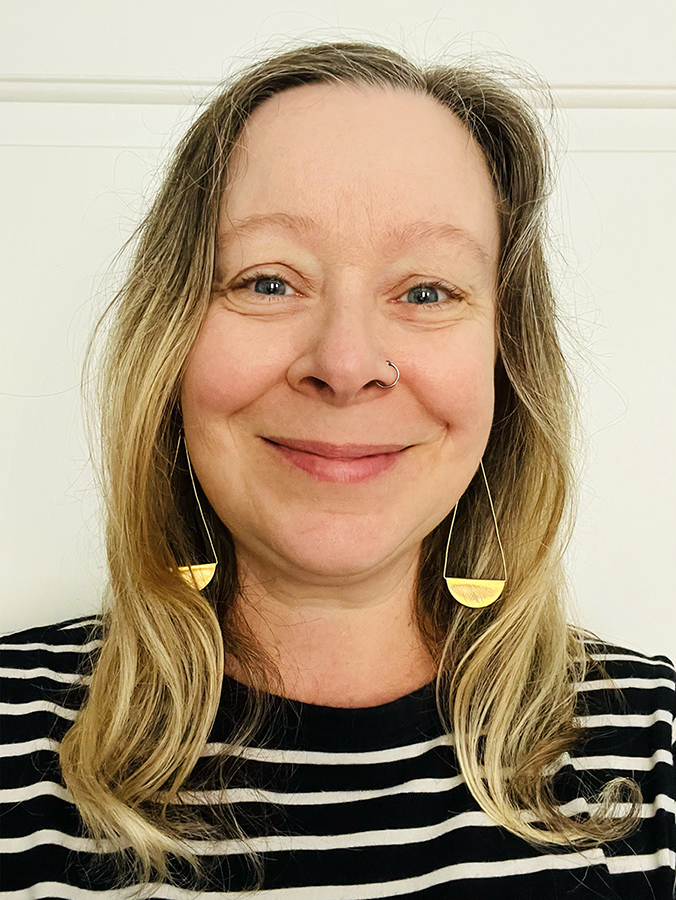
Follow Super Jane!
- Website: www.superjane.com
- Instagram: @superjanesmith
- YouTube: @superjanesmith
- Substack: @superreadersclub
- Amazon Author Page: https://tinyurl.com/4tndedps
- Goodreads: https://www.goodreads.com/author/show/6302142.Jane_Smith
Jane’s Favorite Children’s Books
What other self-published picture books do you recommend?
Jane: I’m a fan of Jessie Thiessen’s indie publishing company Small Jane. She publishes the beautifully illustrated concept books A is for Alphabet, 1 2 3 Count with Me, and Daydreaming in a World of Wonder. I’m also always impressed by the catalogue of titles published by Mims House, the indie publishing company of children’s book author and self-publishing guru, Darcy Pattison. Notably, her Moments in Science non-fiction picture book series is a winner!
Last, but certainly not least. What everyone wants to know: What was your favorite book as a kid?
Jane: So many favorites! How to choose? I absolutely loved Watch Out for Chicken Feet in Your Soup by Tomie dePaola the most. I even wrote Tomie dePaola a fan letter in fourth grade. He wrote back and sent me a signed sticker, letter and poster. I was over the moon! I also adored Spacecase and the George & Martha books by James Marshall. And every time I went to the library, I checked out the version of Baba Yaga by Ernest Small and Blair Lent. I also couldn’t get enough of Richard Scarry’s, Marc Brown’s and Mercer Mayer’s books!
Order Signed Copies of Chloe Zoe books here!
Tell Jenny about your book!
If you are ready to write a children’s book, or have a manuscript you would like me to edit, please contact me below. I look forward to reading your story!